Frame index

Open proofroom

01 / Contact sheet02 / Exposure bench03 / Proof wall04 / Wash sequence05 / Interpretation06 / Contact

Frame 00 / Evidence before certainty

Develop the signal before you scale it.

Qirosalex turns noisy campaign observations into clear comparisons, explicit limits and one decision your team can defend.


Raw signalControlled contrastNamed owner
Analog darkroom desk with photographic contact sheet and exposure timer
Contact sheet 00 / Decisions remain provisional until compared.
Marketing evidence arranged as a photographic contact sheet
Frame 01 / Scan the whole roll before enlarging one result.

01 / Contact sheet

Read one signal three ways.

Change the viewing mode to separate the observation, the missing context and the decision boundary.

Signal view

Name the movement, not the cause.

Describe the observed change in audience behaviour before attaching a channel story.

  • Carry: one measured shift
  • Hold: causal language
  • Next frame: segment comparison

02 / Exposure bench

Choose what the proof must reveal.

Set audience, window and sensitivity. Every combination produces a different, bounded analysis plan.
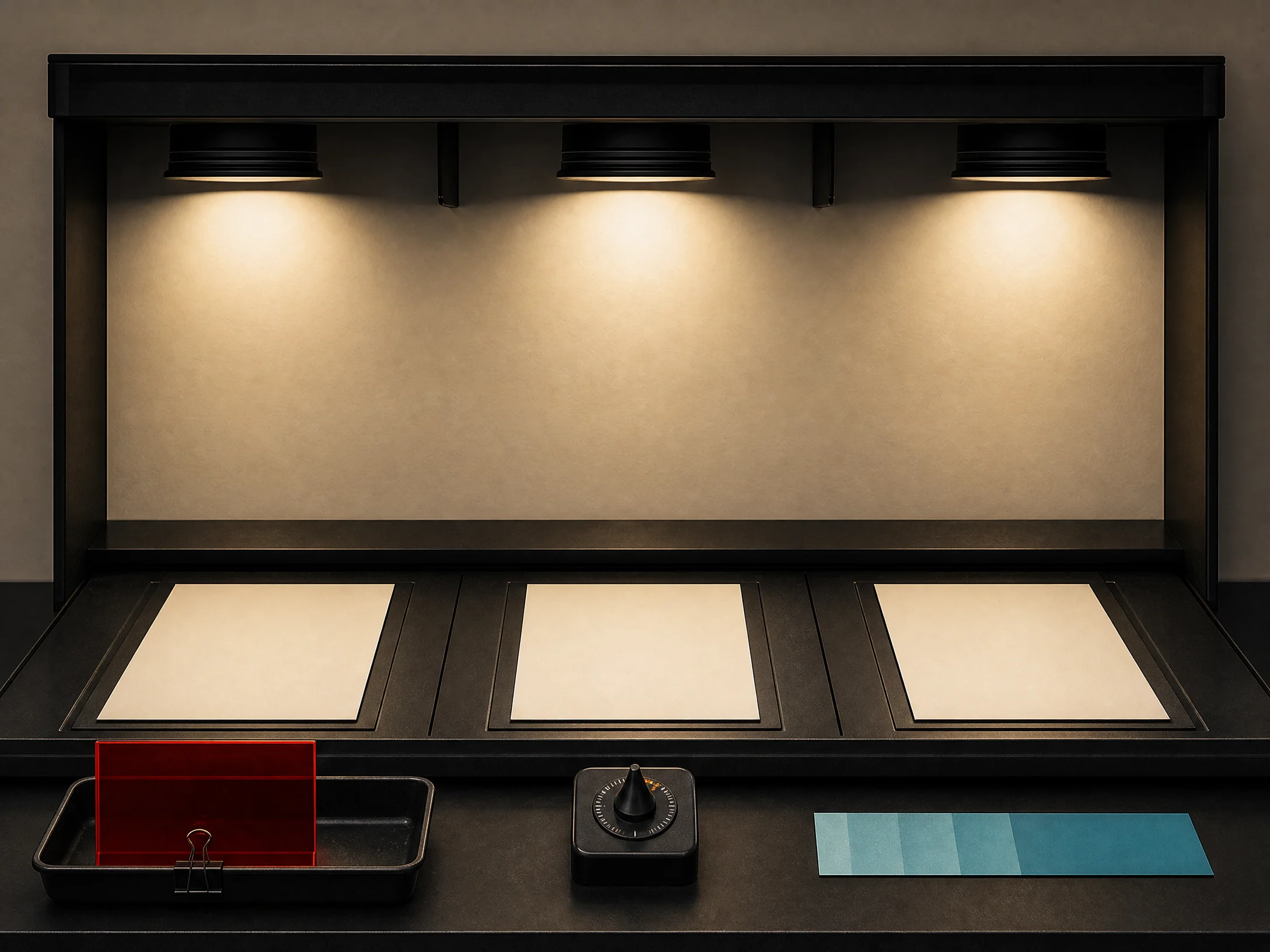
Empty darkroom exposure bench with three illuminated working bays
Bench 02 / Change one exposure condition at a time.
Broad / short / direction

Start with directional movement.

Compare the current cycle with a relevant baseline, then isolate one segment before explaining why the signal moved.

  • Primary proof: trend and segment delta
  • Risk: broad averages hide opposing behaviour
  • Decision: continue observation before reallocating budget

03 / Proof wall

Pin the contradiction beside the result.

A result becomes useful when the team can see what supports it, what weakens it and which decision it changes.

Complete proof

Show agreement and disagreement.

Keep the successful frame, the contradictory segment and the operational consequence on the same wall.

Dark proof wall with photographic frames pinned for comparison
Wall 03 / A clean result still needs a counter-frame.
01

Supporting frame

The target segment moved in the expected direction after the changed message.

02

Contrary frame

Returning customers did not change, so the result is not universal.

03

Decision frame

Extend the test only for new prospects and preserve the existing customer route.

Three photographic wash trays representing a validation sequence
Sequence 04 / Remove one source of distortion per wash.

04 / Wash sequence

Clean the evidence in order.

Capture wash

Remove collection noise first.

Check event definitions, consent, duplicate records and missing identifiers before judging campaign movement.

  • Output: usable measurement boundary
  • Stop condition: unexplained tracking break

05 / Interpretation margin

Match the language to the confidence.

Move the confidence marker. The conclusion, caveat and next action change together.

DirectionalComparativeDecision-ready
Comparative / 50%

Prefer “supports” to “caused”.

The observed difference is useful for comparison, but unresolved channel overlap prevents a causal claim.


Photographic print with a large blank interpretation margin
Margin 05 / Confidence changes the verb.
Layered photographic negatives under warm and cyan light
Negative 06 / Channels overlap before they convert.

06 / Negative sleeve

Inspect the channel without awarding the sale.

Search negative

Separate capture from creation.

Search may record existing intent rather than create it. Compare query classes and first-touch history before assigning incremental value.

  • Inspect: branded versus non-branded
  • Compare: exposed and unexposed cohorts

07 / Cyan proof

Design the comparison before launch.

Use one of three proof modes to expose a different strategic risk.

Message proof

Change the promise, hold the route.

Keep audience, offer and placement stable. Compare one meaningful message difference and define the decision before reading the result.


Cyan photographic proofs arranged for a controlled comparison
Proof 07 / Contrast only one meaningful variable.
Mechanical darkroom timer casting a precise shadow
Timer 08 / Give interpretation a bounded window.

08 / Review timer

Build a decision meeting that ends.

15-minute proof check

One frame, one decision.

  1. 3 min — restate the decision
  2. 7 min — inspect proof and contradiction
  3. 5 min — name owner and next observation

09 / Print request

Bring one decision to the light table.

Describe the choice, evidence and uncertainty already visible. This demonstration validates locally and does not transmit data.

Darkroom desk with an envelope prepared for a print request
Request 09 / Start with the decision, not a data dump.
Enter your name.
Enter a valid email.
Choose your role.
Choose a moment.
Describe the decision in at least 25 characters.
Confirm before preparing the proof.
Proof prepared locally.No information left this demonstration.

10 / Safelight questions

Clarify the boundary before the claim.

Search the proofroom notes or open each answer.

It organises campaign observations into comparison plans, evidence limits and decision-ready review notes. The public version demonstrates the method with examples rather than connecting to live accounts.

A proof can strengthen or weaken an attribution claim, but it cannot erase overlap, selection bias or unobserved demand. Qirosalex keeps those limits beside the result.

Enough means the sample, duration and event quality support the intended decision. A budget commitment needs more evidence than a directional learning note.

A contradiction reveals where the headline result stops travelling. It protects teams from scaling a finding into audiences, channels or moments it did not describe.

No. This static demonstration validates entries in the browser and displays a local confirmation. It does not transmit, store or process the submitted content.

Your team does. The proofroom improves the evidence and language around a choice, while budget, risk tolerance and implementation remain with the responsible owner.
No proof matches that search.Try a broader word or clear the field.